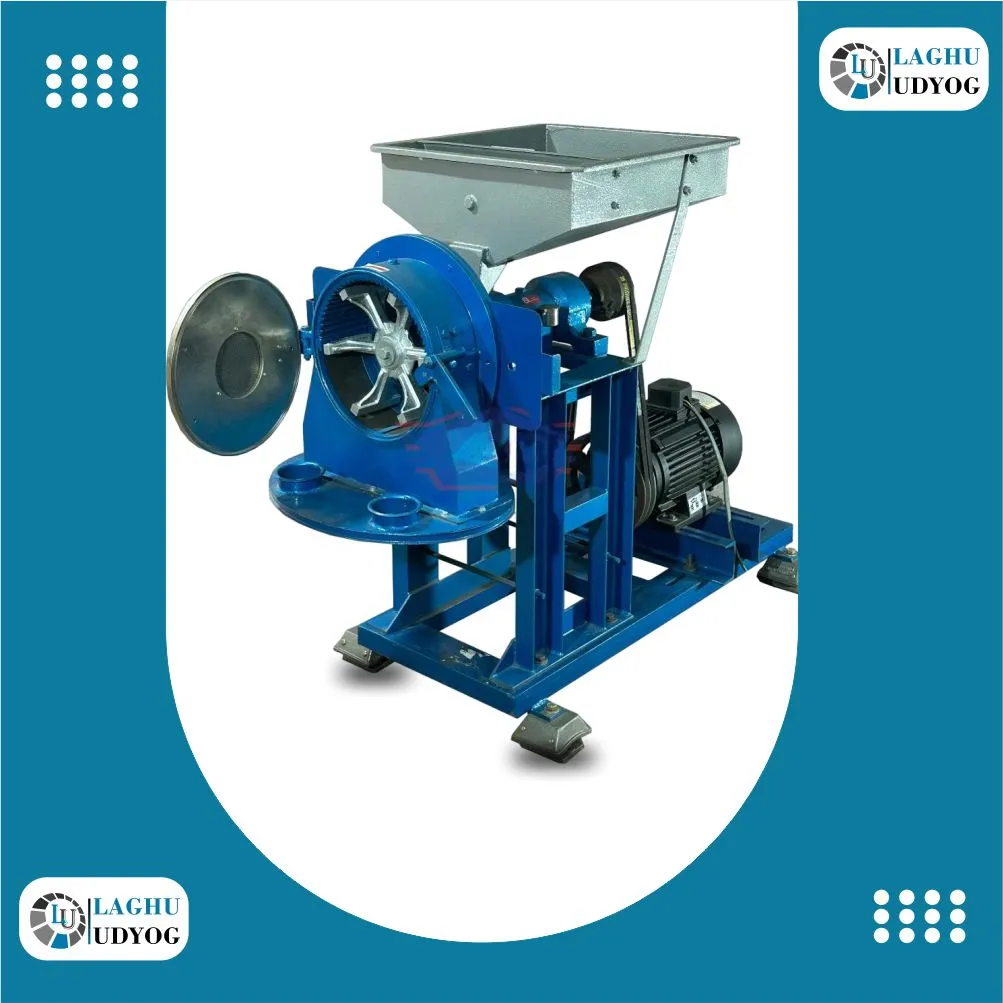
Understanding Atta Chakki and Commercial Flour Mill
The flour grinding industry in India is a thriving business sector with demand growing every year. Whether you are looking to start a small home-based flour grinding service or set up a large-scale commercial flour mill, understanding the differences between an atta chakki and a commercial flour mill is crucial for making the right investment decision.
This is one of the best food processing business ideas. Atta chakki machine price starts from Rs 13,000* making it a great low investment business idea for small entrepreneurs.
Both machines serve the primary purpose of grinding grains into flour, but they differ significantly in terms of capacity, efficiency, price, and target market. In this comprehensive comparison guide, we will analyze every aspect to help you choose the right machine for your specific business needs.
What is an Atta Chakki?
An atta chakki is a traditional and modern flour grinding machine specifically designed for grinding wheat into fine atta (flour). These machines are available in both domestic and commercial variants. Domestic atta chakkis are compact, household appliances suitable for grinding 5-10 kg of flour per session, while commercial atta chakkis are designed for small-scale businesses with higher output requirements.
Modern atta chakkis use advanced grinding technology with stainless steel burrs or stones that ensure fine and consistent flour quality. They are popular among households, small shops, and local vendors who need fresh flour daily. The term "atta chakki" is commonly used in North India, while "flour mill" is more commonly used in other regions.
Features of Atta Chakki
- Capacity: Typically 10-50 kg per hour for commercial models
- Grinding mechanism: Uses burr stones or steel plates
- Power requirement: 2 HP to 5 HP single-phase motors
- Price range: Rs. 16,000
- Best for: Home use, small shops, local grinding services
- Portability: Lightweight and easy to move
- Noise level: Relatively quiet operation
What is a Commercial Flour Mill?
A commercial flour mill is an industrial-grade grinding machine designed for heavy-duty, continuous operation. These machines are built to handle large volumes of grain and can process multiple types of cereals including wheat, rice, maize, bajra, jowar, and spices. Commercial flour mills are used by large-scale flour manufacturers, feed mills, food processing companies, and government procurement agencies.
Commercial flour mills feature advanced grinding technology with multiple grinding stages, automatic feeding systems, and sophisticated quality control mechanisms. They offer superior efficiency, consistency, and throughput compared to atta chakkis, making them the preferred choice for serious business operations.
Features of Commercial Flour Mill
- Capacity: 100-500+ kg per hour
- Grinding mechanism: Roller mills, hammer mills, or plate mills
- Power requirement: 10 HP to 50 HP three-phase motors
- Price range: Rs. 2,00,000 to Rs. 15,00,000
- Best for: Large-scale manufacturing, wholesale supply, industrial use
- Durability: Built for 24/7 operation with heavy-duty components
- Multi-grain capability: Can grind various cereals and spices
Detailed Comparison: Atta Chakki vs Commercial Flour Mill
Let us compare these two types of flour grinding machines across all important parameters:
1. Production Capacity
The most significant difference between an atta chakki and a commercial flour mill is the production capacity. An atta chakki typically produces 10-50 kg of flour per hour, which is sufficient for a small shop or home-based business. A commercial flour mill can produce 100-500 kg or more per hour, making it ideal for wholesale supply and large-scale manufacturing.
For example, if you need to produce 500 kg of flour daily, an atta chakki would require 10-50 hours of operation, while a commercial flour mill could complete the job in just 1-5 hours. This directly impacts your production efficiency, labor costs, and ability to meet large orders.
2. Initial Investment and Cost
An atta chakki requires a significantly lower initial investment compared to a commercial flour mill. A basic commercial atta chakki can be purchased for Rs. 25,000 to Rs. 1,50,000, making it accessible for small entrepreneurs. On the other hand, a commercial flour mill requires Rs. 2,00,000 to Rs. 15,00,000 depending on the capacity and features.
However, the cost per kg of flour produced is lower with a commercial flour mill due to higher efficiency and lower labor costs per unit. This means that while the initial investment is higher, the long-term return on investment can be better with a commercial flour mill for businesses with high production requirements.
3. Power Consumption
Atta chakkis are designed to run on single-phase electricity with motors ranging from 2 HP to 5 HP. This makes them suitable for areas with limited power supply and helps keep electricity costs low. Commercial flour mills require three-phase power connections with motors ranging from 10 HP to 50 HP or more.
The power consumption difference is significant. An atta chakki consumes approximately 1.5-4 units per hour, while a commercial flour mill consumes 8-40 units per hour. However, the cost per kg of flour is lower for commercial mills due to their higher throughput.
4. Flour Quality and Consistency
Both atta chakkis and commercial flour mills can produce high-quality flour, but there are differences in consistency. Modern atta chakkis with advanced burr systems produce excellent quality atta with good texture and nutritional value. However, maintaining consistency over long production runs can be challenging.
Commercial flour mills offer superior consistency due to their precision-engineered grinding mechanisms and automated controls. They can maintain uniform particle size distribution throughout the production run, which is essential for commercial flour brands and food manufacturers who require consistent product quality.
5. Multi-Grain Capability
Most atta chakkis are designed primarily for wheat grinding. While some models can handle other grains like maize and rice, the performance may not be optimal for all types of cereals. Commercial flour mills are designed to handle a wide variety of grains, pulses, and spices with equal efficiency.
If your business plan involves grinding multiple types of grains and offering custom grinding services, a commercial flour mill is the better choice. It allows you to diversify your product offerings and serve a wider customer base without needing multiple machines.
6. Maintenance and Durability
Atta chakkis are relatively simple machines with fewer moving parts, making them easier and cheaper to maintain. Regular maintenance includes cleaning, burr replacement, and motor servicing. The burr stones typically last 1-2 years depending on usage.
Commercial flour mills have more complex mechanisms and require regular maintenance schedules. However, they are built with heavy-duty components designed for continuous operation. With proper maintenance, a commercial flour mill can last 15-20 years or more, making it a long-term investment.
7. Space Requirements
Atta chakkis are compact and can be installed in small spaces, making them ideal for shops and homes. A typical commercial atta chakki requires just 3-5 square feet of floor space. Commercial flour mills require significantly more space, ranging from 50 to 200 square feet or more depending on the capacity.
You will also need space for raw material storage, finished product storage, and packaging area. For a commercial flour mill setup, a total area of 500-1000 square feet is recommended for efficient operations.
Which Should You Choose for Your Business?
The choice between an atta chakki and a commercial flour mill depends on several factors including your budget, target market, production requirements, and long-term business goals.
Choose Atta Chakki If:
- You have a limited budget of Rs. 25,000 to Rs. 1,50,000
- You want to start a small-scale local grinding service
- Your target market is limited to a small neighborhood or village
- You primarily need to grind wheat only
- You have limited space available for installation
- You want to start with minimal risk and test the market first
Choose Commercial Flour Mill If:
- You have a budget of Rs. 2,00,000 or more
- You want to supply flour to wholesale markets, bakeries, and food manufacturers
- You need to grind multiple types of grains and spices
- You require high production capacity to meet large orders
- You plan to build a scalable business with long-term growth potential
- You have access to three-phase power supply
Starting a Flour Mill Business: Step-by-Step Guide
Whether you choose an atta chakki or a commercial flour mill, here are the steps to start your flour mill business:
Step 1: Market Research
Analyze the local demand for flour in your area. Visit nearby grocery stores, bakeries, restaurants, and sweet shops to understand their flour requirements. Identify your target customers and estimate the daily demand. Check the competition and find gaps in the market that you can fill.
Step 2: Business Registration
Register your business as a sole proprietorship, partnership, or private limited company. Obtain necessary licenses including FSSAI license, GST registration, MSME registration, trade license, and any other local permits required for food processing businesses.
Step 3: Location Selection
Choose a location with good connectivity to your target market. The space should be accessible for raw material delivery and finished product dispatch. Ensure adequate power supply, water availability, and proper ventilation. Industrial areas and commercial zones are ideal for flour mill setup.
Step 4: Machine Procurement
Select the right flour mill machine based on your production requirements and budget. Compare different models, features, and prices from multiple manufacturers. Consider factors like capacity, power consumption, maintenance requirements, and after-sales support. Contact us for the best atta chakki machine deals.
Step 5: Raw Material Sourcing
Establish reliable sources for quality wheat and other grains. Build relationships with farmers, grain traders, and wholesale markets. Negotiate bulk purchase agreements to get better prices. Ensure proper storage facilities to maintain grain quality.
Step 6: Staffing and Training
Hire experienced operators and provide training on machine operation, quality control, and safety procedures. For a small atta chakki setup, 1-2 workers may be sufficient. A commercial flour mill may require 4-8 workers depending on the scale of operation.
Step 7: Marketing and Sales
Develop a marketing strategy to reach your target customers. Offer free samples to potential buyers, create attractive packaging, and build a brand identity. List your business on Google My Business, JustDial, and other online directories. Consider offering delivery services to attract more customers.
Cost Analysis and Profit Potential
Let us analyze the costs and profit potential for both options:
Atta Chakki Business (Small Scale)
- Machine cost: Rs. 16,000
- Setup and installation: Rs. 20,000 to Rs. 50,000
- Working capital (3 months): Rs. 50,000 to Rs. 1,00,000
- Monthly production: 3,000-5,000 kg
- Revenue per month: Rs. 30,000 to Rs. 60,000
- Net profit per month: Rs. 10,000 to Rs. 25,000
Commercial Flour Mill Business (Medium Scale)
- Machine cost: Rs. 3,00,000 to Rs. 8,00,000
- Setup and installation: Rs. 1,00,000 to Rs. 3,00,000
- Working capital (3 months): Rs. 2,00,000 to Rs. 5,00,000
- Monthly production: 25,000-50,000 kg
- Revenue per month: Rs. 2,50,000 to Rs. 5,00,000
- Net profit per month: Rs. 50,000 to Rs. 1,50,000
Conclusion
Both atta chakkis and commercial flour mills have their own advantages and are suitable for different business scales. An atta chakki is an excellent choice for entrepreneurs who want to start small with limited investment and gradually build their business. A commercial flour mill is ideal for those who have the capital and ambition to establish a large-scale flour manufacturing operation.
The key to success in either case is understanding your market, choosing the right equipment, maintaining quality standards, and building strong customer relationships. Whatever option you choose, the flour mill business offers excellent profit potential and long-term sustainability in the Indian market.
Frequently Asked Questions
An atta chakki is typically a smaller, domestic or small-scale flour grinding machine designed for grinding wheat into atta (flour) at a capacity of 10-50 kg per hour. A commercial flour mill is a larger, industrial-grade machine with higher capacity ranging from 100-500 kg per hour, capable of grinding multiple types of grains including wheat, rice, maize, and spices. Commercial mills offer better efficiency, consistency, and are designed for continuous heavy-duty operation.
For starting a small-scale flour mill business, a commercial flour mill with a capacity of 100-200 kg per hour is recommended. This provides sufficient output to serve local markets while keeping investment manageable. Popular brands include Lakshmi, Sujata, and local manufacturers. The machine should have stainless steel grinding chambers, multi-grain capability, and dust collection systems for best results.
A flour mill business can generate monthly profits of Rs. 25,000 to Rs. 1,50,000 depending on the scale, location, and market demand. The profit margin typically ranges from 15-25% on flour production. Additional income can be earned from grinding charges (Rs. 3-5 per kg), selling byproducts like bran, and offering custom grinding services for various grains and spices.
Product Price & Details
Atta Chakki Machine
Price: ₹13,000* (Ex-works, GST extra)
SKU: BLOG-FP-002
Brand: Laghu Udyog India | Warranty: 1 Year
Related Products