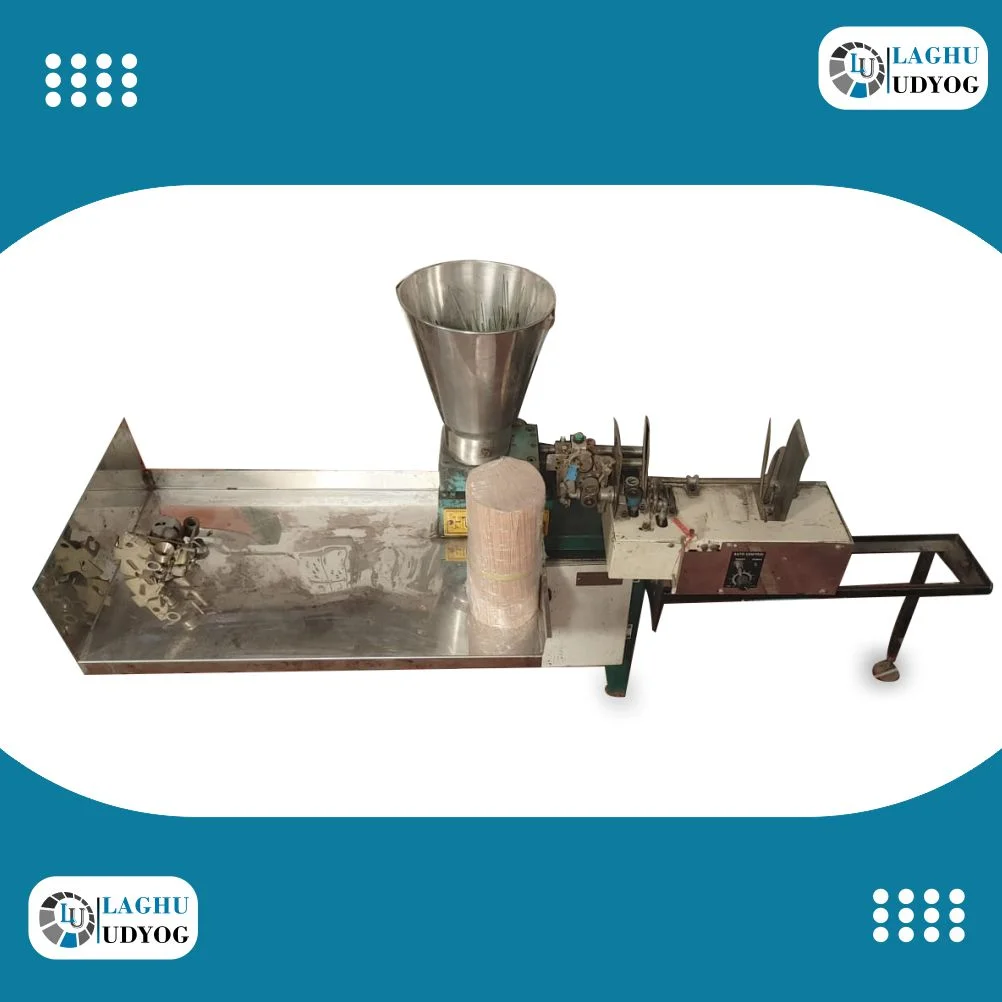
Choosing the right agarbatti making machine is one of the most critical decisions for any entrepreneur entering the incense stick manufacturing business. The machine you select directly impacts your production capacity, product quality, operational costs, and ultimately your profitability. This comprehensive comparison between automatic and manual agarbatti machines will help you make an informed decision based on your specific business requirements, budget constraints, and growth objectives. Agarbatti making machine price starts from Rs 25,000* for manual and Rs 55,000* for automatic. This is one of the best low investment business ideas.
The agarbatti industry offers various types of machines designed for different scales of operation. From simple manual devices that require constant operator attention to sophisticated fully automatic systems that can run with minimal supervision, the options are diverse. Understanding the key differences between these machine types is essential before making your investment decision.
Manual Agarbatti Making Machines
Manual agarbatti machines are the simplest and most affordable option for beginners. These machines require an operator to manually control the bamboo stick feeding, dough application, and removal process. The operator places bamboo sticks one by one into the machine, which then rotates them while the dough coating is applied. The operator must monitor the coating thickness and ensure uniformity throughout the batch.
The production capacity of manual machines typically ranges from 50 to 100 kg of finished agarbatti per day, depending on the operator's skill and speed. These machines are ideal for small-scale operations, home-based businesses, or entrepreneurs who want to test the market before scaling up. The initial investment is low, making them accessible to first-time business owners with limited capital.
However, manual machines have several limitations. The quality and consistency of the agarbatti depend entirely on the operator's skill level. Different operators may produce sticks with varying thickness, which can affect the burning characteristics and customer satisfaction. The production speed is also limited by human capacity, making it difficult to meet large orders or scale production quickly. Additionally, continuous manual operation can lead to operator fatigue, further affecting quality and productivity.
Semi-Automatic Agarbatti Machines
Semi-automatic machines represent the middle ground between manual and fully automatic systems. These machines automate the coating process while still requiring some manual intervention for feeding bamboo sticks and removing finished products. The operator loads a batch of bamboo sticks into the machine's hopper, and the machine handles the coating, rotation, and ejection automatically.
The production capacity of semi-automatic machines ranges from 200 to 300 kg per day, significantly higher than manual machines. These machines offer better consistency in coating thickness and quality compared to manual operations. The automation reduces operator fatigue and allows for longer production runs with minimal breaks. Semi-automatic machines are ideal for small to medium-scale operations looking to increase productivity without the high investment required for fully automatic systems.
The cost of semi-automatic machines falls between Rs 1,50,000 to Rs 3,00,000, making them a reasonable investment for growing businesses. They offer excellent value for money by balancing automation benefits with affordable pricing. Many semi-automatic machines also feature adjustable settings for different stick sizes and coating thicknesses, providing flexibility to produce various product variants.
Fully Automatic Agarbatti Making Machines
Fully automatic agarbatti machines represent the pinnacle of modern manufacturing technology in the incense stick industry. These machines handle the entire production process from bamboo stick feeding to coating, drying, and collection without human intervention. Advanced models even include automatic dough preparation systems, quality inspection cameras, and packaging integration capabilities.
The production capacity of fully automatic machines ranges from 300 to 500 kg per day, with some high-end models capable of even higher output. These machines ensure consistent quality across all produced sticks, with precise control over coating thickness, length, and drying time. The automation reduces labor requirements significantly, allowing a single operator to manage multiple machines simultaneously.
Fully automatic machines cost between Rs 3,00,000 to Rs 8,00,000 depending on features, capacity, and brand. While the initial investment is higher, the long-term benefits include lower labor costs, higher productivity, consistent quality, and the ability to meet large orders efficiently. These machines are ideal for medium to large-scale operations with established market demand and distribution networks.
Key Comparison Factors
Production capacity is the most significant differentiator between machine types. Manual machines produce 50-100 kg/day, semi-automatic produce 200-300 kg/day, and fully automatic produce 300-500 kg/day. This difference directly impacts your ability to fulfill orders and grow your business. If you anticipate high demand or plan to supply to large retailers, investing in higher capacity machinery is essential.
Quality consistency varies significantly across machine types. Manual operations depend on operator skill, leading to variations in stick thickness and coating quality. Semi-automatic machines offer improved consistency but may still have minor variations. Fully automatic machines provide the highest level of consistency, ensuring every stick meets the same quality standards. This consistency is crucial for building brand reputation and customer loyalty.
Operational costs also differ considerably. Manual machines have the lowest operational costs due to minimal power consumption and no automation components. However, they require more operators, increasing labor costs. Semi-automatic machines balance power consumption with reduced labor requirements. Fully automatic machines consume more power but require minimal labor, resulting in lower per-unit production costs at high volumes.
Maintenance requirements vary based on machine complexity. Manual machines have fewer components and are generally easier to maintain with basic mechanical knowledge. Semi-automatic machines have more moving parts and require regular maintenance of both mechanical and electronic components. Fully automatic machines are the most complex, requiring specialized maintenance skills and potentially expensive spare parts.
Making the Right Choice
Your choice between automatic and manual machines should be based on several factors including your budget, production requirements, quality standards, and growth plans. For startups with limited capital, manual or semi-automatic machines offer an affordable entry point. For established businesses looking to scale operations and improve efficiency, fully automatic machines provide the best return on investment.
Consider your target market and customer expectations. If you are supplying to local retail shops with small orders, a manual or semi-automatic machine may be sufficient. However, if you plan to supply to supermarkets, online platforms, or export markets, consistent quality and high production capacity become essential, making fully automatic machines the better choice.
Also evaluate the availability of skilled labor in your area. If skilled operators are readily available and affordable, manual machines can be cost-effective. However, if labor costs are high or skilled workers are scarce, investing in automation reduces dependency on human resources. Many entrepreneurs start with semi-automatic machines and upgrade to fully automatic systems as their business grows and demand increases.
Frequently Asked Questions
Automatic agarbatti machines require minimal human intervention and can produce 300-500 kg per day with consistent quality. Manual machines require operators to control the coating process and produce 50-100 kg per day. Automatic machines cost more but offer higher productivity and lower labor costs in the long run.
For beginners, a semi-automatic machine is recommended as it offers a balance between cost and productivity. It allows you to learn the process while maintaining good production capacity. Once you understand the market and your requirements, you can upgrade to a fully automatic machine for higher output.
Manual agarbatti machines cost between Rs 25,000 to Rs 75,000, while semi-automatic machines range from Rs 1,50,000 to Rs 3,00,000. Fully automatic machines with advanced features cost between Rs 3,00,000 to Rs 8,00,000 depending on the production capacity and automation level.
Product Price & Details
Agarbatti Making Machine
Price: ₹25,000* (Ex-works, GST extra)
SKU: BLOG-AG-002
Brand: Laghu Udyog India | Warranty: 1 Year
Related Products